|
| Typical NBA Critic |
This double-standard becomes especially evident when scrutinizing the host of false assertions and accusations that are frequently hurled at the league by angry, bitter "fans," whose rage is undoubtely fueled by the absence of a Great White Hope in basketball to rally around. Because I've grown weary of these baseless criticisms, and (more importantly) because I have nothing better to do, I've taken it upon myself to debunk and dismiss the most prominent allegations.
"NBA Players Can't/Don't Play Defense!"
Bullshit. Anyone who's watched even a minute of professional basketball over the last fifteen years can attest to the fact that there've been moments when the game has been stifled by too much defense. If someone ever repeats this claim to you, smack them upside the head, spit in their eye, and kick them in the shins. After they've recovered from the shock of being assaulted, direct them to the "League Index" on Basketball-Reference.com, and specifically the 1990 Season Summary, where you'll force them at gunpoint to observe the league-wide offensive statistics of said season:
107 ppg (!), 47.6 FG%, 98.3 Pace Factor (a measure of a "team's possessions per 48 minutes")
These numbers were posted in the midst of the NBA's "Golden Age," when (supposedly) both players and teams possessed the proper basketball "fundamentals" (more on this later) and executed at a level on both sides of the floor that had rarely been seen in league history. And yet, arguably the best defensive team of this specific year and era (the Pistons) gave up 98 points-per-game (first in the league). To give our imaginary NBA critic some perspective, force him or her to click back to the "League Index" page and select the 2004 Season Summary (the last season before hand-checking was outlawed), where (if they're not crippled by fear) they'll undoubtedly become aware of a noticeable dip in offensive numbers in the fourteen-year interval:
93.4 ppg, 43.9 FG%, 90.1 Pace Factor
While some would claim that the precipitous decline of scoring averages and field-goal percentages was the result of a parallel decline in offensive talent, the more plausible explanation is that a league-wide embrace of the defensive philosophy pioneered by the Pistons of the late 80's and early 90's led to a slowing down of the game and a subsequent need for defensive specialists who may not have been as successful if they had played in the higher-paced 80's and early 90's (I'm looking at you, Eric Snow). The numbers (as well as the tape) simply do not support the assertion that there was a greater emphasis on defense before the late 1990's and 2000's; in fact, the opposite is true. Defenses were so good, and so effective, that fans fled in droves, all the while complaining about the lack of defensive effort. Of course.
"NBA Players Lack Fundamentals!"
What the hell does this even mean? Are we talking about dribbling? Passing? Shooting? Rebounding? Since no one has ever taken the time to explain this criticism to me, I'll just assume that those who make it are more concerned with skin pigmentation than anything else (yeah, I said it).
"The League is Fixed!"
David Aldridge debunked this pretty conclusively last season, but since I'm one who loves to belabor the point, I'll reiterate how truly stupid this argument is:
If the NBA was fixed, the Spurs and Pistons wouldn't have won five combined titles in a nine-year span. If the NBA was fixed, the Suns, Kings, and Mavericks (arguably the most entertaining teams of the 2000s) would've made more than one combined Finals appearance between the three of them. If the NBA was fixed, the Pacers wouldn't have beat the Knicks in the Eastern Conference Finals in 2000 and prevented a Knicks-Lakers Finals matchup. If the NBA was fixed, the Nets wouldn't have beaten the Celtics in the ECF in 2002 and prevented a Celtics-Lakers Finals matchup. If the NBA was fixed, the Magic wouldn't have beaten the Cavs in last year's postseason and prevented a LeBron James-Kobe Bryant Finals matchup.
And so on and so forth.
"Only the Best Team with the Best Record Wins the Championship!"
and
"The Regular Season is Meaningless!"
These two criticisms are, paradoxically, tied together. When you hear one, the other is not far behind, and despite all the evidence you may use to disprove these inherently contradictory suppositions the critics in question will fail to see that these claims cancel each other out. If the best team with the best record wins the title every year (which is patently false, but I digress), then the regular season must mean something because it is the barometer by which a team proves its superiority; likewise, if the regular season is meaningless and has no bearing on the playoffs, then the best team with the best record should not, theoretically, win the title every year.
What's especially frustrating about the latter argument is that it's deemed a positive when applied to MLB and the NFL (though doubts have arisen over the competitiveness of the latter in light of last season). If a team with a middling record gets hot and goes on a deep playoff run in either of those leagues, it's a testament to parity and the inherent drama of the postseason; if it happens in the NBA (as was the case with the Celtics this past year), then it's proof of the pointlessness of the regular season and a slap in the face of the teams that finished with better records.
Speaking of parity . . .
"There's No Parity in the NBA!"
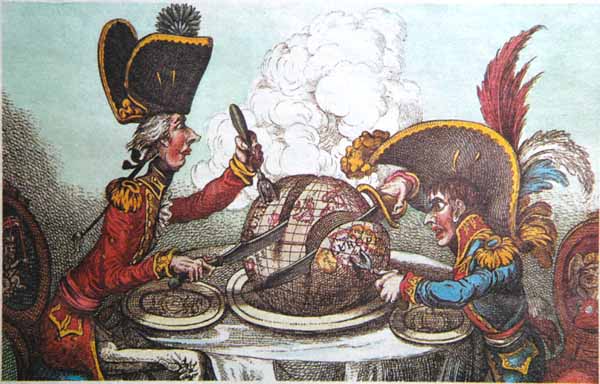
This argument is hard to refute considering the fact that the Celtics and Lakers have won thirty-three titles in sixty-four years, or that the Spurs and Lakers have combined to win nine out of the last twelve championships (and, except for 2006, have appeared in every Finals since Jordan retired). If there was a single picture which could aptly sum up the history of the league, this would be it. Arguably more than any other sport, the NBA is marked by dynasties, which for some is an indication of inherent uncompetitiveness.
Yet at the same time, there's evidence that the league is far more competitive than its detractors give it credit for. Indeed, the conference ironically criticized for being "weak" during the 2000s (i.e. the East) was a paragon of parity; after all, seven teams represented the East in the Finals during those ten years, with only the Nets and the Pistons reaching that round more than once. And despite the stranglehold the Lakers and Spurs have had on the West, the Mavericks, Suns, Kings, Jazz, and Blazers were at least able to offer some resistance and make the proceeding seem less perfunctory.
"NBA Players Are Thugz! LOL!"
Yeah, and the other sports leagues are populated by saints.
This accusation, like the one concerning "fundamentals," probably has more to do with skin pigmentation than anything else.